![]() |
Monday, 10 August 2026
"Make the Most of Your MCC Days" | "Get Your Writing Going" | "Make Writing a Habit" | ❤️
Thursday, 22 January 2026
A Glimpse into MCC History: Selaiyur Hall 1961-1964 | Notes from an Alumnus ❤️
Echoes from the Past |The
Warden and the Historian
As Editor of the MCC Magazine, I happen to receive a lot of interesting articles from ages past, from loyal and devoted alumni of our College.
One such beautiful and memorable ‘speed post’ that I received from an illustrious alumnus of ours – Dr. Narasingarajan from Bengaluru forms the subject of this post.
Dr. Narasingarajan had sent in a note that had a memorable photo taken during his days as a student in MCC.
Now to the photo - 😊
Let’s take a quick moment to travel back in time to more than 52 years ago, to a quiet afternoon at Selaiyur Hall.
Well, the image features a man who needs no introduction to generations of MCCians: Professor Bennet Albert.
Known for his command over English Literature and his disciplined stewardship as Warden, he is seen here presiding over the Non-Residents’ Social.
Sharing the stage is Mr. B. Narasingarajan, the Non-Resident Representative from the Class of 1964 (BA History).
Captured mid-speech while proposing the Vote of Thanks, this image beautifully illustrates the formal yet vibrant student leadership culture that MCC has championed for decades. It is a visual testament to the mentorship and camaraderie that defined the golden era of the 60s.
On Stage
Prof. Bennet Albert
(Seated): The legendary Professor of English and strict Warden of Selaiyur
Hall.
Mr. B. Narasingarajan (Standing): A student of the BA History Class of 1964 and the Non-Resident Representative, seen here proposing the Vote of Thanks.
![]() |
| The Note attached by Dr. Narasingaraja Naidu |
A tribute to the faculty-student bond that defined the golden era of MCC.
Viva la MCC.
Prof. B. Narasingaraja Naidu was Professor & Chairman with Bangalore University, Karnataka. We had invited him to deliver two special lectures in MCC on 30th June 2024.
What touched us the most was, when he paid his respects upon his arrival to his alma mater - to Dr. Miller for a few minutes, before entering the Lecture Hall. You may want to watch that video on our Vlog HERE.
Viva la MCC.
You may want to read a report on the MCC Magazine on our past Blogpost HERE.
Monday, 12 January 2026
"Today’s disruptions are tomorrow’s conventions" ❤️
When a Chief Election Commissioner (T. N. Seshan, an MCC-ian) had the guts to challenge his boss – The Govt of India
When the TN Governor was accused of behaving like a ‘Super Chief Minister’
The “Choli Ke Peeche Kya Hai” Song Controversy in Bollywood
When the Congress PM Rao deputed the BJP Leader Vajpayee as Leader of a Delegation to Geneva
This day, 32 years ago, from my personal diary entry
12th January 1994
#memoriesfromdiaries
Five newsworthy events had happened on this particular day.
The first one is a sweeping allegation by the Chief Minister of Tamil Nadu against the Governor.
The news refers to a severe escalation of the on-going political conflict between the then Tamil Nadu Chief Minister J. Jayalalithaa and the State Governor M. Chenna Reddy.
Jayalalithaa, as CM of Tamil Nadu, had written a strongly-worded letter to Prime Minister P.V. Narasimha Rao, officially demanding the Governor’s recall, accusing Channa Reddy of attempting to function as a “Super Chief Minister.”
She alleged that the Governor was summoning top officials, including the Chief Secretary and the Director General of Police, directly to the Raj Bhavan to review law and order without keeping her (the elected head of government) informed, thereby undermining the authority of the elected state government.
In fact, the trigger was the appointment of the Vice-Chancellor of Madras University. The State Government (Jayalalithaa’s cabinet) had recommended a panel of names for the post. However, Governor Chenna Reddy, in his capacity as Chancellor of the University, rejected (or ignored) the government’s nominees and sought to appoint a candidate of his own choice.
Jayalalithaa viewed this as a direct violation of the convention where the Governor usually acts on the aid and advice of the Council of Ministers! She eventually amended the Universities Act to remove the Governor as the Chancellor of state universities, and stripping him of the powers he was using to ‘disrespect’ her.
Till date, this episode remains one of the most cited examples of Governor vs. Chief Minister conflict in Indian political history.
The second one relates to the Chief Election Commissioner’s battle with the Govt of India.
T.N. Seshan, an illustrious alumnus of MCC, was a highly brave and conscientious IAS Officer, known for his aggressive electoral reforms and strict enforcement of the Model Code of Conduct, which angered many political parties.
To keep a check on Seshan’s ‘unilateral’ authority, the government issued an ordinance converting the Election Commission from a single-member body to a multi-member body, thereby appointing two additional Election Commissioners, M.S. Gill and G.V.G. Krishnamurthy, and stipulated that all decisions would be made by a majority vote.
Seshan however wasn’t happy. He felt that it was meant to paralyse his official powers, and hence approached the Supreme Court.
Although, Seshan won this battle temporarily, he eventually lost the war. In its final judgment delivered in July 1995, a Constitution Bench of the Supreme Court upheld the validity of the multi-member commission. This established the current system where the CEC and other Election Commissioners have equal powers and decisions are made by majority vote.
This episode gets lots of space in Seshan’s Autobiography titled, Through the Broken Glass: An Autobiography.
Moreover, the recent Telugu political action film titled, “Game Changer” (starring Ram Charan and directed by S. Shankar) is heavily inspired by T.N. Seshan’s life and career – where the protagonist is depicted as an uncompromising IAS officer who strives to clean up the electoral system and clashes with corrupt politicians!
Resembles Seshan’s real-life crusade to a tee!
Also, there were a string of advertisements that capitalised on Mr. Seshan’s “Mr. Clean” image. Gwalior Suiting by GRASIM had come out with an advertisement that said,
‘You can’t buy me, but you can buy this suit’, 😊
that speaks volumes to the integrity of the legendary IAS Officer from MCC.
The third one is on the heavy fire exchanged between Indian and Pakistani troops at the border.
The fourth one is about TN Ministers all set to hoist the National Flag on Republic Day.
The fifth news item is on the Information and Broadcasting Minister asking Filmmakers to avoid sex, violence in Films.
The then Minister of Information and Broadcasting, K. P. Singh Deo, made this statement in the context of the 25th International Film Festival of India (IFFI), which was being held in Calcutta, because of the sudden government crackdown on ‘vulgarity’ in Indian media at the time. He used the platform to urge filmmakers to exercise "self-restraint" and “social responsibility.” He argued that while censorship laws existed, the industry itself needed to avoid excessive sex and violence to protect the "cultural fabric" of Indian society.
The primary trigger for this call, was the massive public and political outcry following the release of the film Khalnayak in mid-1993, which featured the song “Choli Ke Peeche Kya Hai”. The song and the movie were widely condemned by conservative groups, politicians, and women’s organizations as obscene and “vulgar,” sparking court cases and parliamentary debates about the decline of moral standards in Bollywood.
Eventually, this put enormous pressure on the I&B Ministry to tighten censorship guidelines.
Deo was also worried about the ‘cultural invasion’ from the skies. He was referring subtly to the early stages of a media revolution in India, when private satellite channels like Star TV and Zee TV had just entered the market, (in 1993-94) thus breaking the state monopoly of Doordarshan.
The government was worried about uncensored foreign content and bold Indian music videos beaming directly into homes. His call to avoid sex and violence was not just about cinema halls but about this new ‘cultural invasion’ that beamed unregulated flood of content!
The takeaway?
Well, there is a famous saying in media that today’s news is the “first rough draft of history.”
The first draft of this day and time, ran pages and reems on T. N. Seshan and his fights with politicians. He was often called “arrogant”. The India Today Magazine had even titled their 15 June 1994 Issue as, “Seshan versus the Politicians”. Connect the dots! And you find that, today he is not seen as a “disruptive bureaucrat” but as the “Father of Electoral Reforms.”
Even history books now divide Indian elections into two distinct eras: the “Pre-Seshan” era and the “Post-Seshan” era.
So proud to note that an MCC-ian is remembered today as the person who single-handedly gave the Election Commission a spine, turning it from a toothless government department into a powerful constitutional body!
Today’s disruptions are tomorrow’s conventions.
Today’s
revolutions become tomorrow’s traditions.
Today’s
chaos turns to tomorrow’s order.
Today’s
radical thought becomes a routine thought tomorrow.
As for us, literary beings, writing becomes a major source
of effecting disruptions!
We call them – intellectual disruptions through our writing and research!
So why do we need disruptions in writing – especially intellectual disruptions in academic writing and research writing?
Without disruption, societies stagnate, injustices thrive, and we fail to perceive newer realities.
Status quo is good, in as much as it acts as a stabiliser for society. However, it can also become a prison. Writing and research are the two primary tools we use to break the bars of that prison house!
One of the foremost duties of the student and the teacher, in academia, is to disrupt the status quo – by killing the bad idea!
Therein lies the power of the writer!
Wait! What?
Yes,
a writer is indeed a disruptor! 😊
PS: You may want to read more on Seshan on our past blogpost HERE.
Monday, 5 January 2026
"How do you become a diplomat? I think you can start with being a student of Madras Christian college" ❤️
The T. G. Narayanan Endowment Lecture
5th January 2026 | 10.30 am
A Report
The Chief Guest of the day was Shri T. P. Seetharam, IFS, former Ambassador of India to the UAE, and an illustrious alumnus of the Department of English, MCC.
Dr. Joshua, introduced the Chief Guest of the day.
Excerpts from his introduction –
It’s my wonderful privilege to introduce the chief guest - Ambassador TP Seetharam. He was the Chairman of Heber Hall in 1977-78. He did his BA in Loyola College in English Literature from 1974 to 76, then he came to MCC to do his Masters here in English language and literature from 1976 - 78.
I’m sure he would agree with me that he found true freedom after coming to MCC, where he could enjoy boundless freedom here - not only in the Hall, but in the department and in the college as well.
That is one of the unique features of MCC. MCC has always encouraged the freedom of thought and they are also given the freedom to pursue those ideas, those desires which are close to their heart, and that really shapes our careers as well. We are also happy to have his classmate here with us – who is none other than Dr. Nirmal Selvamony.
Four of them in the class formed the Think Tank of the Class –
T.P. Seetharam
Nirmal Selvamony
Indu Menon
Sandhya
These four formed the quartet – the Think Tank.
Now while he was a student here, Seetharam had aspirations to get into civil services, and he is from a very distinguished family. His elder brother also got into IFS.
While he was in MCC, he exhibited his talents of leadership – both as a thinker and a writer and he also contributed articles to the College Magazine. And this has always been a tradition.
In MCC, some of the best and the brightest minds in the college would be contributing articles, either in the Department Magazine or in the College Magazine.
The best example is Dr. Sarvepalli Radhakrishnan, the former President of India, on whom I did my research as well. When he was the student of this college from 1905 to 1909, he wrote two articles in the college magazine and they were well-appreciated, and this laid the future foundation for his intellectual thought.
So that’s how you students also must explore avenues and means of expressing your own thoughts through writing – it could be writing short poems or essays, or book reviews.
This will definitely contribute to your later career. So TPS had two of his articles published in the College Magazine. From this we know how innovative, creative and expressive he was, even when he was a student here. And then in 1980, he got into civil services. Let me also share that, MCC has contributed some of the best civil servants in the country, and that includes T. N. Seshan.
In fact, the very first Foreign Secretary of India, Shri KPS Menon was a student here. After his studies here, he got into Civil Services, and he became one of the well-respected diplomats. He was Foreign Secretary from 1948 to 52.
Coming back to TPS, he interacted with Rajiv Gandhi, Angela Merkel, Bill Clinton, K. R. Narayanan, Narendra Modi, etc. Finally, he was appointed Ambassador to UAE, from 2013 to 2016, when, he hosted our Prime Minister Narendra Modi (the first PM to visit the UAE after Indira Gandhi).
In the Global Alumni Meet of 2016, in MCC, Mr. Seetharam was our Chief Guest.
It’s my honour and pleasure to invite Ambassador Seetharam to our midst,
said Dr. Joshua in his introductory note.
The topic of today’s lecture by Mr. T.P. Seetharam was, ‘Service without Borders: The Role of Diplomats’.
Giving us all a few excerpts from his engaging speech -
Good morning, everybody here. Thank you, Dr. Franklin for this opportunity. Thank you, Dr. Joshua for introducing me generously, and also for having introduced me earlier to Dr. Franklin.
I don't have a prepared speech. Even if I had one, I would have to tear it up, because what Trump has done in the last couple of days.
It’s about diplomacy.
How do you become a diplomat? I think you can start with being a student of Madras Christian college. It's even better like I did.
I also had the privilege of teaching English Literature in MCC for a year, against a leave vacancy.
They say that there’s no way to learn a subject better than to teach it. That’s because when you have to teach something you have to understand what it’s all about.
So a lot of my learning happened when I was teaching here for a year. And at that time, of course there were some very good teachers and one of them I should mention here, is Prof. Rajani, from the English department who is, sadly, no more.
He was a friend, philosopher and advisor to all of us. And most importantly, he gave me a key to the English department library.
I had access to that English department library while I was teaching here for a year. And after having stayed in Heber as a student, I was staying in St Thomas’s Hall, while being the assistant professor of English. So after dinner I would walk with the key to the main building.
There was nobody in the main building at that time, and I would lock myself into that tiny library and stay there, read and take my notes and sleep there. The library was very helpful for me.
I did choose English as one of my subjects for the Civil Services, apart from Sociology – of which I knew nothing about.
But a friend offered to lend me his notes. I only studied his notes.
I passed the exam. He didn’t.
His father was at that time the Foreign Secretary of India.
His girlfriend also was taking the exam after studying from his notes.
She also passed and joined the IAS.
However, he went on to become a very distinguished person in the NGO sector. So MCC is a good place to begin your preparations for the Civil Services.
It is a highly competitive exam. I will not go into the details now, since this afternoon at the MCC-IAS Academy I will be talking about the mechanics of getting into the services.
So what is diplomacy all about?
It's supposed to be everything that Trump does not stand for.
It’s about making friends.
It is civilised behaviour.
It’s not being selfish. It’s not about Make my Country Great Again, but about, making OUR countries great again. It about engagement, it’s about networking.
And we have a very strict selection process. In 1980, when I joined the service, in my batch there were 20 young probationers. This 20 is from the 1,15,000 people who took the exam.
So that is the intense competition. And once you are in, there is a very extensive training programme in India for about two years. You are sent to Jawaharlal Nehru University, you are attached with the Indian Army in the border areas. You learn how to fire a pistol on a semi-automatic and you are attached in the office of a district collector in a district for a period of time.
What you should never forget is that, as a diplomat, living abroad, you are representing India. India, with all its glorious history and past, India, with all its achievements.
So you need to understand India very well if you wish to represent India outside. My first assignment was in Hong Kong.
My job was to go there to study Chinese language. I had opted for it. They asked me, which language I would you like to study?
Most others chose French Russian or Arabic. And the languages are spoken by many countries.
I chose Chinese because I thought that it was a difficult language.
As for French, you can pick up in three months, but Chinese are Japanese are languages which require dedicated study over a period of time.
And the government was sending me to Hong Kong to study Chinese at the university there for two years.
Before going to Hong Kong, I was a probationer, attending the first India-China border talks in Beijing.
I was a note-taker in the backbench in 1983. What has that happened to the border issues since then?
I serve the government for 36 years. Retired 10 years ago, India-China border issue still remains unresolved. I hope some of you will join the foreign service, and resolve our border issue. If you can help, you'll be a great service - to both India and China and the world. Some issues take a long time.
The Chinese say that they will solve this problem, when the time is right!
To be continued…
Dr. Franklin Daniel, our Head of the Department gave the welcome address. Our Principal Dr. Paul Wilson gave the Inaugural address, while Dr. Aruna gave the Vote of Thanks, followed by the closing prayer done by Dr. Ann Thomas. Prof. DC was amazing as MC. Indeed she made Dr. David’s day end on a very happy note, today! 😊
On the whole, a very rewarding day in every way!
PS: You may want to look up the first edition of the T.G.
Narayanan Endowment Lecture on 21 December 2012, on our past blogpost HERE
You may also want to look up the 13th edition of the T.G. Narayanan Endowment Lecture, on 5th December 2024, on our past blogpost HERE
Monday, 23 June 2025
"This involves a “cutting away” from the former self – the child, the high school student and the pampered kid back at home" ❤️
The Day Today | Orientation for Freshers (UG)
#reflections
23rd June 2025
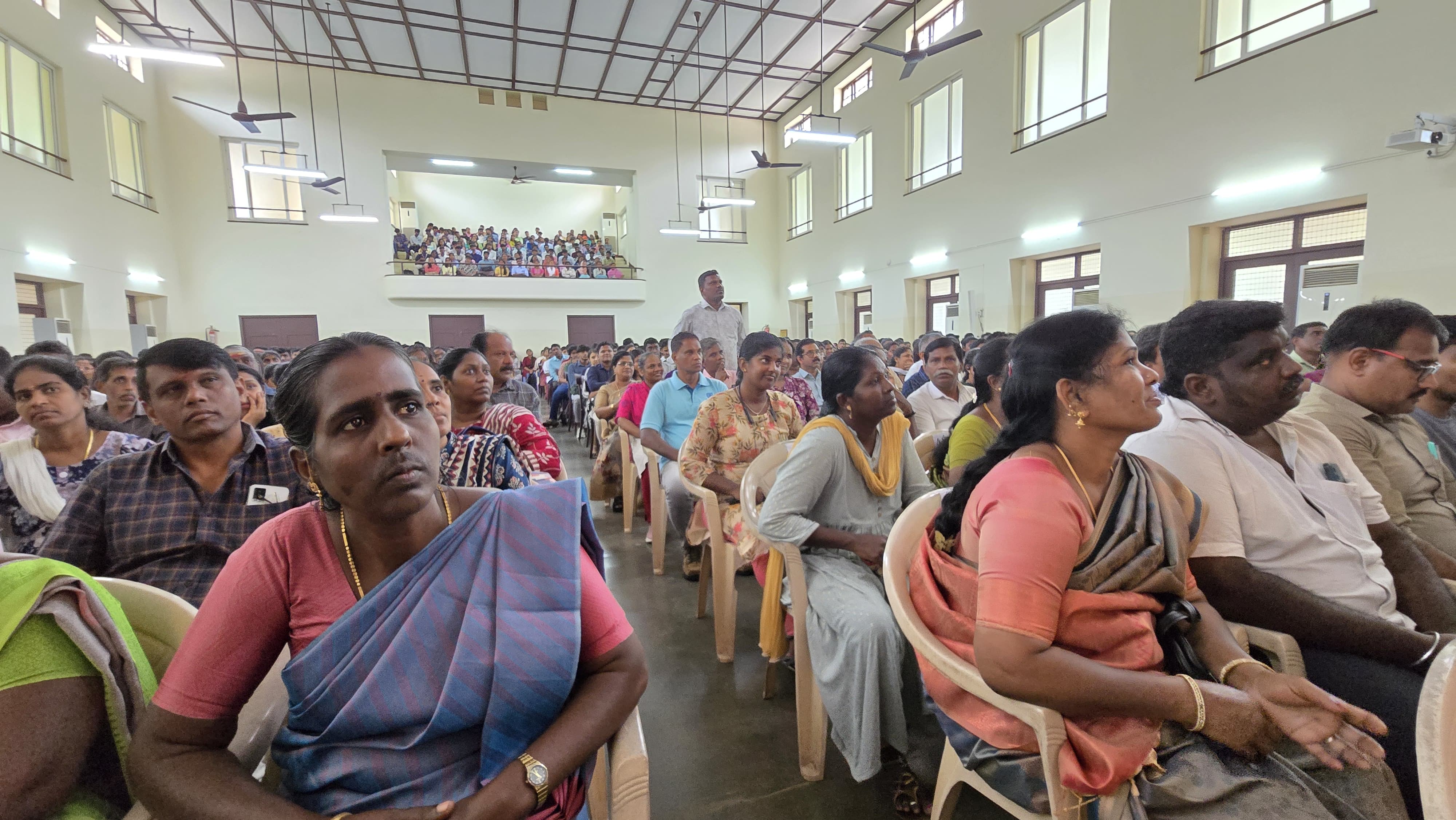
Today was a memorable day for all Freshers who stepped into College life for the very first time in their lives.
Anthropologist Arnold van Gennep, calls it, “rites of passage,” identifying three universal stages to this rites of passage. [He introduced the concept in his 1909 book titled, The Rites of Passage.]
The first one is the Preliminal or Separation stage which involves detaching from an earlier fixed point in the social structure. For a college student, this is leaving their home, their school life and their familiar social circle behind, and entering a new stage in their life.
This involves a “cutting away” from the former self – the child, the high school student and the pampered kid back at home.
The second one is the “between” or the liminal stage, where the individual has left their old state but hasn’t yet fully entered the new one. College life, especially the first year, is highly liminal.
For the first time, the student is far away from direct parental supervision, navigating and experiencing new freedoms and responsibilities, encountering a host of diverse perspectives, and forming new identities. This stage involves a lot of challenges and obstacles that contribute to maturation.
The final one is the Postliminal or the Incorporation stage, when the individual re-enters society with their newfound status and identity. The entire process of adapting to College life and succeeding in college life, culminates in a new sense of selfhood and a readiness for adulthood!
Coming back -
The Orientation for Freshers started at 8.15 am in the Anderson Hall. Our Principal Dr. Paul Wilson introduced the officials of the College.
The Dean of Student Affairs, the Controller of Examinations, the Dean of International Programmes among other officials outlined the various features of their respective Units to the students.
Dr. Huldah Samuel, the Dean of Student Affairs, kept the audience engaged throughout the programme by asking surprise questions to the audience from the presentations of the officials, and also gave them prizes.
Prof. Smilkha, Dept of Visual Communication, and her team did an amazing performance on the visuals front.
Our Principal Dr. Paul Wilson gave a very insightful and panoramic sweep of the various Units and Activities in which students can involve themselves. He gave a suggestion to students to open their CV right on the first day of their college life, and add to their CV each passing day, to see how they have improved their skills over the days.
Citing from Angela Duckworth’s book titled, Grit: The Power of Passion and Perseverance, he emphasised on the importance of passion and perseverance for long-term goals.
Duckworth’s definition of grit emphasizes two crucial, intertwined elements:
The first one is Passion. Passion isn’t a fleeting interest, but a deep, enduring commitment to an “ultimate concern” or a goal that gives meaning to almost everything you do. It’s about having a profound interest and ambition that fuels your efforts over time.
The second one is Perseverance, which refers to the ability to maintain effort and stick with a goal despite obstacles, setbacks, and slow progress. It’s about resilience, determination, and the willingness to overcome challenges, rather than giving up when things get tough.
Grit isn’t a fixed trait but it can be cultivated through deliberate practice and by developing a growth mindset and finding purpose and meaning in one’s goals,
he observed.
After the Orientation for Freshers in the Anderson Hall, all three of us in the Office of International Programmes had to rush back to our Office to conduct the interview for students who had applied for Internship with our Office. We had shortlisted 15 students for the interview today.
Today I was so happy to meet with the mother of one of our past vibrant students, Benedicta.
I was so happy to know that, even her dad had studied in MCC in the 1970s, and she had come down from the US to admit her kid in MCC for her UG.
“My Dad’s life was always around MCC,” she said with such happiness on her.
I’ve requested her to give an article for the College Magazine, and she gladly agreed.
More power to you, Ma’am.
I was also happy to meet with Stephanie’s parents today in our Office.
“You have given us gold! She’s such a vibrant and lovely kid who’s been such a great influence on the Office”, I proudly told them. So happy to note that Stephanie has been chosen to do her Semester Abroad in Japan.
Sabarinathan, our former Global Student Ambassador texted me, saying he was already missing his heaven MCC so much. He had also penned a lovely post for his freshers on his blog here, on his blog.
His message was so sweet. Giving it here for us, for posterity’s sake!
Was so happy to meet with Pearlina, who had returned from LeTourneau University, Texas, after doing her Semester Abroad there.
I was able to see the visible transformation in her. She was now more forthcoming, mor exuberant and more lively than before.
“Do you see any marked change in you, Pearlina?” I asked her.
“Yes, Sir. Lots. For the first time I was able to live all by myself, far away from my home, family and friends, in a new environment, and for the first time ever I adapted to living in the hostel’, she said.
Felt so happy for her. More power to you, Pearlina. So happy to see a better version of yourself.
Then, Dr. Amirthavalli, our Dean of Quality Assurance, arrived at our Office promptly at 12 pm as promised, and she suggested a few corrections in the International Study Tours Policy Draft.
Her minute attention for details, made me so happy. She took time and patiently explained the need for the corrections. So proud of you dear Ma’am.
Sharp at 1.15 pm we were in time for the Freshers’ Orientation for the students of the Self-Financed Stream. Principal led the Orientation as in the morning.
By 2.30 pm, Principal, HoDs and Deans left for the Academic Council in the Council Room. Today a few important Courses were approved by the Academic Council including a Value-Added Course on Theory of Music. Special congratulations to Dr. Jacob George and Dr. Daniel Evans for making it possible.
The Meeting of the Academic Council got over by 5.30 pm.
However, mid-way I came to the office briefly, to oversee tomorrow’s Study Abroad Seminar. We have three special guests from abroad for tomorrow’s first Study Abroad Seminar of the new academic year.
Dr. Sanjay Purushotham
International Affairs,
Dallas Baptist University,
Texas, US
Ms. Elka Mariam Thomas
Teaching Assistant,
Office of International
Studies,
Hoseo University,
South Korea
Dr. Robert C. Williams
Founder and President/CEO,
Pennsylvania Center for
International Exchange and Partnership (PCIEP)
PA, USA
To register, students can fill in the Google Form given below.
https://forms.gle/AT64zVE5eTRpokwHA
Due to limited seating, kindly be seated early to secure your spot in the Seminar Hall (by 11.20 am tomorrow).
During Interaction Time, (towards the end of the Seminar), students can have their doubts clarified directly with the speakers.
Students interested in getting more info on opportunities abroad, may join the Whatsapp Channel on this link below.
https://whatsapp.com/channel/0029VbAyI1xJJhzgg8Q4GM2i
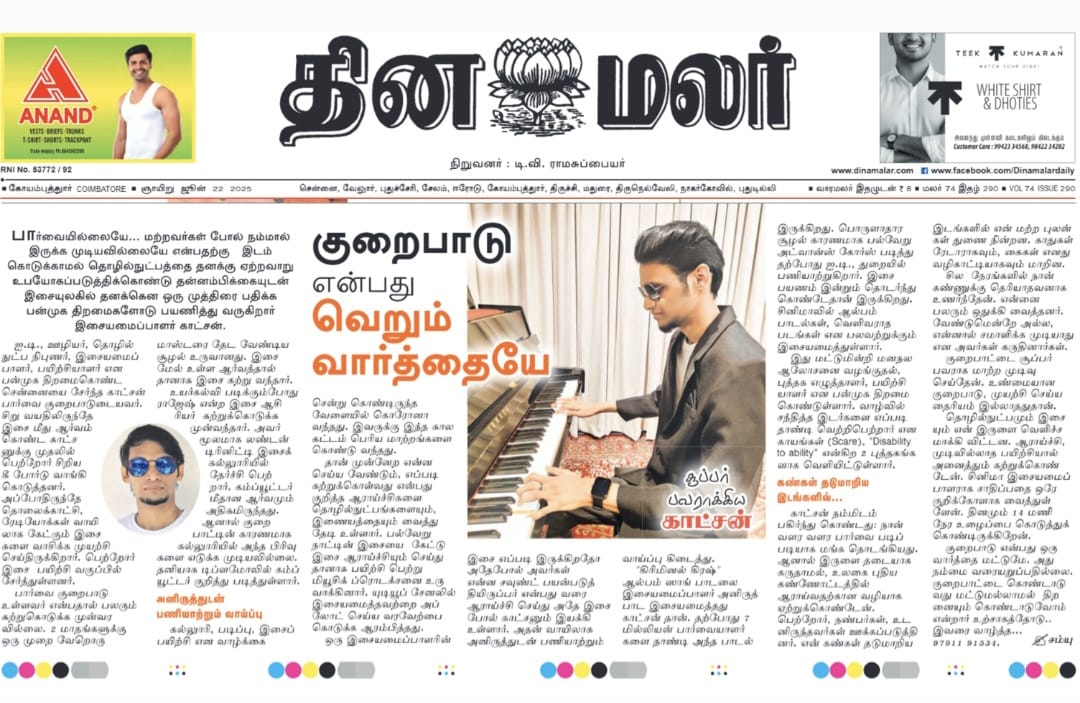
Finally, special congratulations to dear Rudolph Godson (who did his BA & MA in English in MCC), India's First Visually Challenged Music Director who has composed music with Anirudh and for Actor Vijay, on being featured in today's Dinamalar.
We are so proud of you dear Godson.
Featured post
Why Research Matters | Insights from Today’s Research Writing Workshop at Loyola College ❤️
Reflections on Today’s Research Writing Workshop Loyola College | PG & Research Dept of English 31 August 2026 It was an absolute joy to...


.png)
.png)
.png)
.png)
.png)


.jpeg)


.jpeg)