 |
| Director Priya, alumnus, Dept of English, interacting with students @ Sel Hall |

Tuesday, 14 December 2010

Guest Lecture V - Invite..:
Dear Students of English Literature,
Rufus
You are invited for a Guest Lecture, as part of your preparations for the UGC-NET exams, on "A Panoramic View of Indian Literature in English," by Prof.Ms.K.Latha, Asst Professor of English, Stella Maris College, at 3 pm on Wednesday, 15 December 2010 at Martin Hall Auditorium. All ye students with a love for literature are cordially invited.
Regards and all best wishes, Rufus
Tuesday, 7 December 2010
THE ZEBRA POETRY FILM FESTIVAL @ MCC

The English Association, Madras Christian College,
&
Prakriti Foundation, Chennai, in collaboration with the Goethe Institue Max Mueller Bhavan
proudly present
THE ZEBRA POETRY FILM FESTIVAL at Madras Christian College
which will be held in
Martin Hall Auditorium
on 15 December 2010 at 11:45 am
All Film and Poetry Enthusiasts are Welcome..!
Monday, 6 December 2010
"Roman Fever" - Critical Appreciation
“Roman Fever” – Edith Wharton – A
Critical Appreciation
Edith
Wharton was born near Washington Square to wealthy and distinguished parents
rooted in colonial times. She was educated privately at home and abroad
acquiring an early command of foreign languages and an easy familiarity with
English and continental society. Her first writings were poems published
anonymously in 1880. At 23, she married Edward Wharton of Boston. They lived,
at first, in New York city, then successively in New Port, Rhode Island and
Lennox, Massachusetts, with frequent visits to Europe. In 1907 she settled
permanently in France.
Her
ethical sense, her poetic sensibility and compression were evident in her first
collection of stories – The Greater Inclination (1899). Her other works include
– The Valley of Decision (1902), The Descent of man (1904), The House of Mirth
(1905), Ethan Frome (1911), The Fruit of the Free (1915) and The Tales of Men
and Ghosts (1910). The Tales of Men and Ghosts contains some of her best
stories of the supernatural. During the war years she gave much of her energy
to the organisation of relief activities. Fighting France (1915) and The Main
(1918) are war novels. After the war Edith Wharton returned to New York. The
Age of Innocence (1920), her greatest novel, was awarded the Pulitzer Prize and
has remained a landmark.
Edith
Wharton’s stories were centered upon the changing society of New York city
during her own lifetime. She viewed this genteel, formalised society with a
woman’s eye; and being primarily a satirist, she was interested in the dynamics
of the society itself.
The
setting of the short story “Roman Fever” is important, simply because it
symbolises the emotional state of the two principal characters – Mrs. Alida
Slade and Mrs. Grace Ansley. The setting revives memories for “two American
ladies of ripe but well-cared for middle age.” They have come back to Rome for
a holiday in the company of their younger daughters.
“What
different things Rome stands for to each generation of Travellers,” says Mrs.Slade.
“To our grandmothers, Roman fever, to our mothers, sentimental dangers – to our
daughters, no more dangers than the middle of Main Street.” The setting, Rome,
with its bewitching skies that turn gold in the afternoon and purple at sunset
once again affect the two matrons, latterly widowed. Sitting on the lofty
terrace of their Roman Restaurant they are visibly stirred by the “Spring
effulgence of the Roman skies”. They contemplate the view in silence with a
“diffused serenity,” each lost in her thoughts.
Saturday, 4 December 2010

Guest Lecture in Progress @ Selaiyur Hall..:
 |
| Dr.Geetha, delivering her talk on African American Literature |
Dr.Geetha, gave a bird's eye-view of African American Literature, she starting with the Black-White symbolism, where white stood for everything that is good, beautiful and pure, wheareas black came to stand for all that is bad, evil, night, ugliness and hell. She elaborated on Noah's curse, and the European yardstick which states that any nation that has a written tradition of literature is considered to be civilised, and since African literature was primarily oral, they were considered uncivilised. Indeed, they were also called as the 'missing link' between man and the apes, and as 'noble savage' who needed to be civilised.
Tracing the oppression of the Africans from the time of the Slave markets, where a white landlord was assessed for his riches based on the number of slaves that he owned, she delved into the two stereotypes created by Darwin's evolutionary theory.... to be contd...
Friday, 3 December 2010
Guest Lecture - Reg..:
Dear Students of English Literature,
You are invited to participate in the Guest Lecture by an eminent scholar Dr.Geetha, on African American Literature, on Saturday, 04 December 2010 from 9:30 am to 1:00 pm at the Selaiyur Hall Indoor Theatre.
All ye students with a love of literature please do attend and be benefitted.
Regards and all best wishes,
Rufus
Thursday, 2 December 2010
The Intra-Department Quiz Competitions @ DoE
 |
| Video Round in Progress...! |
The Intra-Department Quiz Competitions
The Video Round in
Progress
The Intra-Department Quiz Competition took off to a flying start this morning at around 11:50 am. The programme started with the reading of the College Prayer by Dr. Ann Thomas, followed by the customary welcome address.
Meet the fabulous Teams and their spectacular Stars -
I BA English: Kaveri Murthy, Arya Kamal and Sruthi
II BA English: Venkateswaran,
Janakaseeni, Surabhi Jain
III BA English: Joanna
Daniel, Anand, Meenu Mary Jain
I MA English: Shloka,
Udhayaraj, Bersiya Grace
II MA English: Vinita
Teresa, Mahendran, Parvathy Nair
MPhil: Steffy Rachel, Ann
Mary Mathew (Subhashini for cheering them up!)
Prof. Abitha opened the first round with a sensational quiz on World Classics, and Prof. David gave the students a challenge with his rounds on British Literature. Dr. Ganesh led the interesting round on Indian Writing in English, followed by Prof. DC who quizzed the students on American Literature and Quotations.
Next in line was the Video Round on famous English Classics, conducted by Dr. Ganesh, wherein ten great classics were screened, (in the newly bought projector screen!) and students answered them with elan.
The last round - Rapid Fire, was conducted by Prof. Rufus, wherein five questions were asked in quick succession to each of the six teams, and in this round the II MA team pulled up a surprise, winning hands down the I Prize, thus pocketing Rs. 200 each, [although there was a neck-and-neck-tie between II BA English and II MAs till the previous round].
The II BA team won the second prize, bagging Rs. 150 each,
and the III BA team won the third prize, bagging Rs. 100 each.

Wednesday, 1 December 2010
Intra-Department Literary Quiz - A Report
The Intra-Department Quiz Competition took off to a flying start this morning at around 11:50 am. The programme started with the invocation by Dr.Ann Thomas, followed by the customary welcome address.
Prof.Abitha opened the first round with a sensational quiz on World Classics, and Prof.David gave the students a challenge with his rounds on British Literature. Dr.Ganesh led the interesting round on Indian Writing in English, followed by Prof.DC who quizzed the students on American Literature and Quotations.
 |
| The Video round in session... |
The last round - Rapid Fire, was conducted by Prof.Rufus, wherein five questions were asked in quick succession to each of the six teams, and in this round the II MA team pulled up a surprise, winning hands down the I Prize, thus pocketing Rs.200 each, [although there was a neck-and-neck-tie between II BA English and II MAs till the previous round].
The II BA team won the second prize, bagging Rs.150 each,
and the III BA team won the third prize, bagging Rs.100 each.
Meet the fabulous Teams and their spectacular Stars -
I BA English: Kaveri Murthy, Arya Kamal and Sruthi
II BA English:Venkateswaran, Janakaseeni, Surabhi Jain
III BA English: Joanna Daniel, Anand, Meenu Mary Jain
I MA English: Shloka, Udhayaraj, Bersiya Grace
II MA English: Vinita Teresa, Mahendran, Parvathy Nair
MPhil: Steffy Rachel, Ann Mary Mathew (Subhashini for cheering them up!)
A special note of thanks goes to Prof.Chitra, for her immense help in the video round, Prof.Dinesh, for Audio arrangement, Ms.Georgina, the Chairperson of the Eng Assn, and Ms.Punnya Rajendran, Secretary of the Eng.Assn, for their effective organisating skills, Anuj Dev Leslie, for effective photography coverage, Ajin Abraham, Cerin Simon and Anand, K, for taking care of the lights&sound, our dear Dr.Stephen for giving us all the freedom to use the Indoor theatre, Dr.Felix Moses, our beloved Head of the Department who graced the occasion, our ever beloved Dr.Ganesh, who has been leading the Association through example, aplomb and grace.
All our lovable colleagues in the Department deserve a warm note of thanks for their support and guidance.
All our dear students deserve a special note of thanks for their impeccable behaviour throughout the programme, encouraging and cheering their respective teams with gusto. Kudos guys!
Monday, 29 November 2010
Wanted: Creative Writing..:
Dear Students of English Literature,
You are invited to contribute your creative vibes for the Department Magazine. Original, unpublished articles - Poems, essays, short stories etc can be given. Contact Prof.DC for details.
Bring your gifts to the world.
Regards and all best wishes,
Rufus
You are invited to contribute your creative vibes for the Department Magazine. Original, unpublished articles - Poems, essays, short stories etc can be given. Contact Prof.DC for details.
Bring your gifts to the world.
Regards and all best wishes,
Rufus
Monday, 15 November 2010
BEC Course - Orientation
Students who have registered themselves for the BEC Course are asked to come for the Orientation on Tuesday, 16 December 2010 at 2:00 pm. The Principal will inaugurate the program at 2:15 pm at the Selaiyur Hall Indoor Theatre.
All are welcome.Regards,
Rufus &
Dr.Ann Thomas
(Course Coordinators)
Friday, 12 November 2010
Guest Lecture - IV - Invite..:
Dear Students of English Literature,
All ye students with a love for literature, you are most welcome to partake in the next guest lecture which is scheduled to be held on Saturday, 04 December 2010.
Regards and all best wishes,
Rufus
All ye students with a love for literature, you are most welcome to partake in the next guest lecture which is scheduled to be held on Saturday, 04 December 2010.
Try to keep your day free on this lovli day, to have a rendezvous and a tete-a-tete with an illustrious professor of repute, who has kindly consented to share her expertise with us.
Details follow.Regards and all best wishes,
Rufus
Friday, 15 October 2010
For Students of I BSc Pbt/Zoo(Reg)
Dear Students of I BSc Pbt/Zoo(Reg),
Your grand internal mark statement for Semester-I will be displayed on Monday, 18 October 2010 by 9.30 am in the Notice Boards of the Dept of English.
Corrections, and/or clarifications, if any, can be made to me, directly or via email, on or before Friday, 22 October 2010. As regards Lesson Summaries, I shall try to upload at least a couple of them by Monday.
Regards,
Rufus
Course Teacher
Friday, 1 October 2010
I BSc Pbt/Zoo - II CIA Test - Reg
Dear Students of I BSc Pbt/Zoo,
 Prepare well for any two poems and two prose lessons of your choice, from the text book.
You will also be tested from Intermediate English Grammar book - Units 1 - 10.
Also, make sure that you submit your assignments on 04 October 2010 without fail.
Your examination will take place in the same Venue where you wrote your I CIA Test.
Regards and all best wishes,
Rufus
Friday, 17 September 2010
THE ENGLISH ASSOCIATION INAUGURAL - A REPORT
The Activities of the English Association for the academic year 2010 - 11, were inaugurated today by Dr.Ms.Deepika Subramanian, Head, Marketing and Training, BEC-India, British Council, Chennai, in the presence of our Principal Dr.Alexandar Jesudasan.
 |
| Dr.Felix Moses speaks |
 |
| Dr.Alexander Jesudasan speaks |
The Principal, in his inaugural address, talked on the importance of the English language in communication today, and emphasized the importance of the BEC Exams for better employability. He noted that, "Our mother tongue is not English but what happens eventually is that, we try to learn English to communicate with people. Neither are we confident in our mother tongue, nor in our target language - English." He said it was amazing to see the extraordinary demand among students, to join a course in BA/MA English Literature over the past few years."
He added that, "The Cambridge Business English Certificate, is being offered by Cambridge University, and that the University is 801 years old. It is the second oldest in England and the seventh oldest in the world. BEC, he said serves to "complement" the student's fundamental knowledge of literature. Today, we are moving into a world where communication is of great importance. Our students are picked up like hot cakes in the job market, for the simple reason that their communication skills are exemplary and it makes sense too. The start of the BEC programme is one more feather in the cap of the Dept of English. To scale up our performance, this BEC is a soliciting exercise. In the past two decades many rural students joined our college without any initiation into communication skills, but soon became masters of communication, and rose up to occupy prestigious posts at the national and at the international level.
 |
| Dr.K.Ganesh speaks |
Dr.K.Ganesh, President of the English Association, then proceeded to introduce the Chief Guest , and also introduced the Chairperson and the Secretary of the Department for this current academic year.
"A few words about the Chief Guest: Ms.Deepika studied at Ethiraj College, and completed an MBA in Strategic Management in the UK and holds a PhD from the US. She has worked in the UK, USA and France for 12 years and returned to India in 2005. At the British Council, she heads Exams - Marketing & Training. Her role involves extensive travel across India, understanding the educational needs across regions. Currently, she manages the largest project, The South East Asia's British Council IELTS Scholarship - 20 scholarships on offer across six countries."
The Chief Guest of the day, Ms.Deepika observed: 'I used to absolutely envy this wonderful place - the environs, professors, students, as i used to be a part of the drama troupe of Prof.Rajani, the legendary theatre personality, and then Professor of English, MCC. Talking about the yawning gap between employability and communication skills, she said that the industry has been trying to bridge this gap. With the growth of the IT sector, the demand has only fuelled the need further. British Council's key project - "Project English" provides quality English language teaching and training, from primary learners to advanced corporate users, which is at the heart of what we do in India and Sri Lanka," she said.
 |
| Chief Guest of the Day Ms.Deepika speaks |
Thursday, 16 September 2010
I BSc Pbt/Zoo I CIA Marks - Reg.:

Dear Students of I BSc Pbt/Zoo(Reg),
Your I CIA Answer Sheets will be distributed to you personally, in the S-220 Classroom, at 8.30 am on Friday, 17 September 2010.
A copy of the same will also be displayed, on this, our academic blog on the same day.
Clarifications, if any, can be made to me, personally or by email on or before Friday, 24 September 2010.
Regards and all best wishes,
Rufus
A Note on Valuation Methodology Used:
I look for clarity of expression, presentation and development of your argument in a logical manner, and also for proper sentence structure.
Over-writing has been penalised, yet minimally.
Observation of Word limit criterion has also been looked into.
Grammatical accuracy has been given weightage.
Relevant illustrations, [examples] have been awarded generously.
[Accurate] Quotes and [precise] dates have been appreciated.
Coherence, which makes your sentences hold together, and clarity of thought [clear language] have been fairly rewarded.
Neatness gives you an additional bonus of one mark.
Remember, symbols like '&' should be avoided at all costs in the examinations, as they can never substitute for the word they seem to represent.!
Last but not the least, numbering all your pages makes my work less complicated!
Well, A bird is known by his note, the man by his words and a student, by his performance.
And that's what i expect from you... dear students...!
Regards and all best wishes,
Rufus
A Note on Valuation Methodology Used:
I look for clarity of expression, presentation and development of your argument in a logical manner, and also for proper sentence structure.
Over-writing has been penalised, yet minimally.
Observation of Word limit criterion has also been looked into.
Grammatical accuracy has been given weightage.
Relevant illustrations, [examples] have been awarded generously.
[Accurate] Quotes and [precise] dates have been appreciated.
Coherence, which makes your sentences hold together, and clarity of thought [clear language] have been fairly rewarded.
Neatness gives you an additional bonus of one mark.
Remember, symbols like '&' should be avoided at all costs in the examinations, as they can never substitute for the word they seem to represent.!
Last but not the least, numbering all your pages makes my work less complicated!
Well, A bird is known by his note, the man by his words and a student, by his performance.
And that's what i expect from you... dear students...!
Regards and all best wishes,
Rufus
Tuesday, 14 September 2010
POSTMODERNISM - Excerpts from the Lecture..:
Excerpts from the Lecture on Postmodernism, by Dr.ASD Pillai on 04 September 2010.
Most of the societies in the United States have entered the Post industrial stage. First, there was the Pre-industrial, then the Industrial stage, and then the Post-industrial times.
 In the Industrial age, we depended on the machines. Now highly developed societies have entered the post industrial age. The chief occupation of man is to process information and knowledge. Now you find less and less industries, and more and more people working on computers. Machine technology has now been replaced by Industrial technology. During Industrial times, industrialised nations were characterised by availability of raw materials and cheap labour. Today in the Post-industrial age our raw material is information and knowledge, and this has transformed the nature of knowledge.
What is produced, sold and bought is not goods but knowledge. [Like you buy soap and powder]. That is why the Postmodern society is also called knowledge society or information society. Today knowledge has become a commodity, which you can buy or sell, and that has greatly affected education today.
Formerly, nations were fighting for territory. Now they fight for data banks. Hereafter databanks must not be stolen. So, there is a need to protect and govern knowledge. So, knowledge and governance go together.
There are two kinds of knowledge:
1. Traditional knowledge from our own folk tales, epics, puranas, which are otherwise called as narrated knowledge.
2. Scientific knowledge - which always insists on proving whether your knowledge is correct or not. In the former, nobody wants to prove it, but in scientific knowledge, you've got to prove your point. Scientific knowledge is characterised by verification. "The savage mind is equal to the civilised mind", says Claude Levi-Strauss.
So scientific knowledge considered itself superior to narrative knowledge and the Westerners brought scientific knowledge. So the West considered themselves superior to the Non-West. That is how their domination over the East was born.
Postmodernism signifies the fall of science and the fall of Western society and its cultural institutions. Whether there is a fall or not, there is a rethinking.
Science itself has changed somewhere in the 1960s. Virginia Woolf said that human nature changed in 1910. But human nature changed originally in the 1960s. because it was at this time that all these great things were happening in science. Somewhere in the 1960s, science underwent a great crisis because of certain books - by J.F.Lyotard, T.Kuhn and Feyerabend.
You can look at the Postmodern condition from various dimensions. My friend said that MCC has got four gates. Well, Postmodernism has got 14 gates..!!! Architecture being one of the firsts among them. Malcolm Bradbury introduced me to the agony and the ecstasy of Postmodernism.
T.Kuhn's Structure of Scientific Revolutions (1962), Paul Feyerabend's Against Method (1975), these two books, they did science in. We all think that scientific knowledge is accurate. For the first time they proved that it is not possible to prove anything accurately in this world. How did they do it? through the field of Microphysics. "Can you completely describe the cowness of a cow?"
The very presence of man disturbed the structure. Can you give a 100% accurate census of Madras city? Absolutely not. This whole scenario was brought out beautifully by
Heisenberg's indeterminacy principle - Structuralism took over from this point. The perceiver alters the perceived object at least in a minimal way. If this is true of science, what about social science? - where there's less accuracy. Light - we are not sure whether it is a particle. Normally, as accuracy increases, uncertainty, indeterminacy decreases. But, John Bered argued that when accuracy increases, uncertainty also increases. So, there's no such thing as determinacy in science. Contrary to what we think, scientists are also exchanging ideas about nature, like philosophers and social thinkers do.
Thomas Kuhn talks about "Paradigm Shift". The phrase that's commonly used whenever you study Postmodernism. The phrase "Paradigm Shift" is taken from science. Scientific discovery, scientific growth is continuous. It is not addictive. It is discontinuous, catastrophic, paradoxical.
What is a Paradigm Shift? At one point of time, one scientific theory rules the whole world. Many experiments will be conducted in the light of this theory. But still, certain questions remain unanswered. Then a new theory comes. Before Copernican theory came, there was a Ptolemic theory.
"This world is beyond all your philosophies put together" - Hamlet.
Newton's theory was replaced by Einstein's. Hence, all scientific theories are additive. "Science is producing not the known, but the unknown. It goes on creating new mysteries", says T.Kuhn in Structure of Scientific Revolutions.
This is the first, of a five-part series on Postmodernism, delivered by Dr.ASD Pillai at MCC. The rest will follow soon...!
Thursday, 9 September 2010
Be A Better Writer: Three Considerations - An Exclusive Guest Post for our Blog.:
As a composition teacher, I discovered that my students were most frustrated by assignments that failed to give them some sort of context in which to situate their own writing. Too often they felt that academic writing was isolated and irrelevant. As a result, they had been writing rather uninspired essays in order to simply earn a mark. Certainly they had a solid understanding of writing; however, that solid understanding had also somewhat limited their potential to grow into better writers.
What follows are the three considerations I often shared with my students in order to help them better relate academic writing to the greater activity of their lives. I hope these considerations may be of some use to you as well.
1 Consider Your Purpose
Of course, you write in order to earn academic credit, but that’s not the only reason you write. You must also keep in mind that you write in order to explore an idea, to communicate an idea to an audience, or to persuade someone that your idea is worthwhile. If your professor asks you to analyze a speech, then your purpose is to show him that you understand specific rhetorical techniques and can explain how those techniques operate by using textual evidence. If your instructor asks you why grammar is important to the study of language, then you must compose an argument and support that argument with reasons and evidence.
Each prompt requires a certain task, and your writing must match that task with a certain purpose. Think of your purpose as a student: to improve as a critical thinker. Writing aids you in that purpose.
2 Consider Your Audience
As you complete your assignments, try to think of the audience for whom you write. Try to think of an audience that’s more specific than a general academic audience. For instance, your professor makes up part of your audience. As do your classmates. These people participate in a learning community, of which you are an active member, so thinking of them as an audience makes sense.
The knowledge that these people--with whom you often interact--will read your essay should help you write honestly and carefully. And such awareness will help you in the future when you put your communication skills to use in your career.
3 Consider Your Genre
While many genres of academic essays share similar characteristics, you’ll still want to consider how genre affects your writing. Return to the examples I suggested earlier. Both a rhetorical analysis of a speech and a persuasive essay on the importance of grammar make arguments in some way; however, how they do so--what expectations of genre they meet--will vary. A rhetorical analysis will heavily rely upon extensive quoting and interpretation of textual evidence, while a persuasive essay might use many kinds of evidence in order to appeal to an audience. If you turn in a rhetorical analysis with few quotations excerpted, most likely you have not done enough to achieve your essay’s purpose.
This guest post is contributed by Olivia Coleman, who writes on the topics of online colleges and universities. She welcomes your comments at her email Id: olivia.coleman33 @gmail.com.
Sunday, 5 September 2010
Teachers' Day - Special Wish for all our Teachers..:
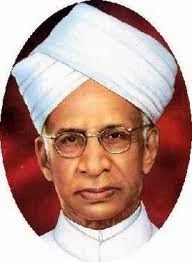
5th September - The day that commemorates the birthday of the greatest alumnus of Madras Christian College - Dr Sarvepalli Radhakhrishnan, a philosopher and a teacher par excellence, who studied in our great and invincible College for five long years - which, as he has later acknowledges, had laid the strong foundations for his future dynamism as the leader of this great country, and for his immense contribution to the Indian education system.
Dr Radhakhrishnan believed that "teachers should be the best minds in the country". On this great day, we gratefully remember this, our great educationist, apart from honoring all the teachers who have made our lives much more brighter and enlightened in all facets of our life.
Thank you dear Teachers! It is impossible to imagine our lives without you! You are the cornerstone of our future. We can never thank you enough, dear teachers, for your immense love, dedication and encouragement in our lives. Today, it is our duty to celebrate and show our acknowledgement and recognition of the hard work put in by you - towards our development. Thank you dear Teachers.
Saturday, 4 September 2010
Dr.ASD Pillai being welcomed by Dr.K.Ganesh for the Guest Lecture Series..:
 |
| Dr.K.Ganesh, extending a warm welcome to Dr.ASD Pillai |


Friday, 3 September 2010
Actor Nassar Interacting with Students @ Selaiyur Hall [03 Sep]
 |
| Actor-Director-Writer Nassar @ Selaiyur Hall, MCC |
Thursday, 2 September 2010
Guest Lecture for Students of English Literature...:

Dear Students of English Literature,
We invite you for the third in a series of Guest Lectures by eminent Academicians.
Dr.ASD Pillai, a world-renowned exponent of Postmodernism, and an illustrious student of the influential British literary critic F.R.Leavis, is giving a special lecture on Postmodernism, as part of your preparations for the UGC-NET Exams.
Venue: Martin Hall Auditorium
Date: Saturday, 04 September 2010
Time: 9:30 - 12:30 pm (3 hrs)
The session will be inaugurated at 9:30 am by Dr.K.Ganesh, Reader in English, & President of our English Association.
There will be a refreshment break midway, and also a time for personal interaction and discussion.
All of you are invited...! Be there!
Regards, Rufus
Subscribe to:
Posts (Atom)
Featured post
Paper Tiger vs Real Tiger ❤️
While Others Catch Up, We’ve Been Leading! The MCC Language Legacy #newspaperinlearning 25th July 2026 I happened to read an article in toda...
