
Thursday, 24 February 2005

Tuesday, 15 February 2005
The Ancient Asian View of Man - Dr.S.Radhakrishnan
 The Ancient Asian View of Man – Dr. S. Radhakrishnan
Introduction:
“The Ancient Asian View of Man” is an address delivered at Columbia University, U.S.A., by Dr. S. Radhakrishnan. It presents the peculiarly Indian view of the DIVINE IN THE HUMAN SELF, the realization of which will lead to the regeneration of man in the West, and thus save him from the destructive tendencies of scientific progress.
Influence of Indian Culture on the World:
All the living faiths of mankind have had their origin in Asia:
China : Confucianism and Taoism
India : Hinduism, Buddhism, Jainism and Sikhism
Palestine : Judaism and Christianity
Iran : Zoroastrianism
Arabia : Islam. Hence, the religions adopted by the western people are all derived from Asia, of which Indian culture has influenced a large part of Asia’s thought and art.
Doctrine of “tat tvam asi”:
Indian culture is best known to the outside world by the doctrine of tat tvam asi, which means, the eternal is in one’s self. The Bhagavad-Gita says that the spirit of man is immortal.
Weapons cannot cleave the Self,
Waters do not make him wet,
Wind does not make him dry, and
Fire does not burn him.
Waters do not make him wet,
Wind does not make him dry, and
Fire does not burn him.
He is eternal, all-pervading, unchanging; he is the same forever.
Being vs. Having:
According to Dr. Radhakrishnan, we confuse Being with Having. Instead of using our houses, our wealth, and our other possessions, we allow them to possess and use us; so we become lost to the life of the spirit and are soulless. Our bodies are the Temples of the Divine; the Vessels of the Spirit; when we realize this, we outgrow individualism. We see that we and our fellow-men are the expressions of the same spirit. We are reminded of the death-bed statement of Socrates: “I am not an Athenian or a Greek but a citizen of the world.”
Religion: A Transforming Experience:
Carl Jung says, “Who looks outside, dreams; who looks inside, awakens.”
Similarly, religion is a transforming experience. It is insight into reality. When the individual withdraws his soul from all outward events, gathers himself together inwardly, he gets a sacred, strange, wondrous, and quickening experience within him. This experience is the proof of the reality of God.
The Common Ground of all Religions:
According to Dr. Radhakrishnan, at its depth, all religions express the same truth. The different religious traditions rest on a common ground. This common ground is base on the hope of the future. Both the Asian and Western outlook on life gives us the basic hope for the new world, which is on the horizon.
Loss of Faith: Spiritual Displacement in the Modern Age:
Modern scientists and technicians speak of man as a purely mechanical and material being. They seem to be blind to the higher sanctity, which lives in man. Hence, those who are born in this age feel the loss of faith; they are the spiritually displaced, the culturally uprooted, and the traditionless.
The Only Hope for Man: A Spiritual Recovery:
The only hope for man is a spiritual recovery, the realization that he is an unfinished animal, and his goal is the kingdom of God, which is latent in him. Without a spiritual recovery, the scientific achievements threaten to destroy us. We are living in days of destiny. Either the world will blow up in flames or settle down in peace. It depends on the seriousness with which we face the task of our age.
******
Being vs. Having:
According to Dr. Radhakrishnan, we confuse Being with Having. Instead of using our houses, our wealth, and our other possessions, we allow them to possess and use us; so we become lost to the life of the spirit and are soulless. Our bodies are the Temples of the Divine; the Vessels of the Spirit; when we realize this, we outgrow individualism. We see that we and our fellow-men are the expressions of the same spirit. We are reminded of the death-bed statement of Socrates: “I am not an Athenian or a Greek but a citizen of the world.”
Religion: A Transforming Experience:
Carl Jung says, “Who looks outside, dreams; who looks inside, awakens.”
Similarly, religion is a transforming experience. It is insight into reality. When the individual withdraws his soul from all outward events, gathers himself together inwardly, he gets a sacred, strange, wondrous, and quickening experience within him. This experience is the proof of the reality of God.
The Common Ground of all Religions:
According to Dr. Radhakrishnan, at its depth, all religions express the same truth. The different religious traditions rest on a common ground. This common ground is base on the hope of the future. Both the Asian and Western outlook on life gives us the basic hope for the new world, which is on the horizon.
Loss of Faith: Spiritual Displacement in the Modern Age:
Modern scientists and technicians speak of man as a purely mechanical and material being. They seem to be blind to the higher sanctity, which lives in man. Hence, those who are born in this age feel the loss of faith; they are the spiritually displaced, the culturally uprooted, and the traditionless.
The Only Hope for Man: A Spiritual Recovery:
The only hope for man is a spiritual recovery, the realization that he is an unfinished animal, and his goal is the kingdom of God, which is latent in him. Without a spiritual recovery, the scientific achievements threaten to destroy us. We are living in days of destiny. Either the world will blow up in flames or settle down in peace. It depends on the seriousness with which we face the task of our age.
******
Monday, 14 February 2005
Monday, 20 December 2004
Activism, drama and Environment
The Third World Conference and XI All India English Teachers' Annual Conference jointly organised by WASLE, IASCL and Department of English, MCC, got underway today. The third session was on Activism, Drama and Environment: Ongoing Struggles for Environmental Justice of Asian Immigrants in America, delivered by Kaori Mori, Shibaura Institute of Technology, Japan.
Excerpts from her Lecture:
"Environmental Justice" is relatively a new notion, first recognised officially by the United Nations' Environmental Summit in 1992. This notion seeks for environmental justice for all the people whose residential areas are environmentally unhealthy and dangerous. In an American context, those who need environmental justice are, for example, Native Americans whose residential areas are near nuclear waste processing facilities. African and Hispanic Americans also pursue environmental justice because some of their residential areas are notorious for crimes. We could see that environmental justice is intertwined with racism. However, is environmental racism a recent phenomenon?
If we read American minority literatures carefully, we can see how American minorities have lived in environmentally disadvantageous areas throughout history. Monica Sone, a second generation Japanese American writer, depicts how her family had undergone environmental racism in 1930's in Seattle, in her Nisei Daughter. Her family lived in Skidrow, "with shoddy stores, decayed buildings, and shriveled men" (8). When they looked for a better house in a white people's residential area, because of their race, they were told, ""I am sorry, but we don't want Japs around here" (114) by a white woman. Thus, American minorities had to live in environmentally problematic areas, and they had struggled for better living environment.
As a strategy to overcome environmental racism, Asian immigrants had tried to have better education. Harry Kitano and Roger Daniels report that Asian Americans "choose the so-called safer professions, where visibility is not as important as the quality of their education and credentials" (82).
Excerpts from her Lecture:
"Environmental Justice" is relatively a new notion, first recognised officially by the United Nations' Environmental Summit in 1992. This notion seeks for environmental justice for all the people whose residential areas are environmentally unhealthy and dangerous. In an American context, those who need environmental justice are, for example, Native Americans whose residential areas are near nuclear waste processing facilities. African and Hispanic Americans also pursue environmental justice because some of their residential areas are notorious for crimes. We could see that environmental justice is intertwined with racism. However, is environmental racism a recent phenomenon?
If we read American minority literatures carefully, we can see how American minorities have lived in environmentally disadvantageous areas throughout history. Monica Sone, a second generation Japanese American writer, depicts how her family had undergone environmental racism in 1930's in Seattle, in her Nisei Daughter. Her family lived in Skidrow, "with shoddy stores, decayed buildings, and shriveled men" (8). When they looked for a better house in a white people's residential area, because of their race, they were told, ""I am sorry, but we don't want Japs around here" (114) by a white woman. Thus, American minorities had to live in environmentally problematic areas, and they had struggled for better living environment.
As a strategy to overcome environmental racism, Asian immigrants had tried to have better education. Harry Kitano and Roger Daniels report that Asian Americans "choose the so-called safer professions, where visibility is not as important as the quality of their education and credentials" (82).
Monday, 22 November 2004
DO-2
I HR: I BSc Pbt/Zoo: Taught the importance of stress and intonation in class.
Absentees
Pbt: Anitha Sh, Radhika, T, Shalini, S, Sheeba RD, Clynes Paul, Janardhanan, Kripan, Nithaniyel Sadanand, Sai Santhosh, Santharaj
Zoo: (R): Adline Jennefer, Anitha, P, Kalaivanai, N, Devasitham, Junior Chacko, V, Madhanraj, K, Shan, Sundaram, T, Shanmugarajan, Sheen, Sri Gowthaman, Thiyagaraja, K
Zoo (V): Srimathy, S, Himmat, Pravin,N, Ramasamy, N, Santhosh, C
Absentees
Pbt: Anitha Sh, Radhika, T, Shalini, S, Sheeba RD, Clynes Paul, Janardhanan, Kripan, Nithaniyel Sadanand, Sai Santhosh, Santharaj
Zoo: (R): Adline Jennefer, Anitha, P, Kalaivanai, N, Devasitham, Junior Chacko, V, Madhanraj, K, Shan, Sundaram, T, Shanmugarajan, Sheen, Sri Gowthaman, Thiyagaraja, K
Zoo (V): Srimathy, S, Himmat, Pravin,N, Ramasamy, N, Santhosh, C
Tuesday, 12 October 2004
David Crystal @ British Council, Chennai

Excerpts from his speech:
"English has become a tool to get a job done, and a standard that ensures mutual intelligibility", David Crystal said, to a gathered crowd of intellectuals and scholars from the Teaching community of Chennai.
David Crystal spoke about three revolutions that have impacted the English language in the last ten years:
1. First of all, the emergence of a global language, a phenomenon wherein English has diversified into as many forms as the countries it is spoken in.
2. The second revolution, according to Crystal, that greatly affected the world today, was the language crisis. "Half of the 6,000 languages in the world will be seriously endangered or are likely to die out in the course of this century", he lamented. That means, one language is dying out every 2 weeks!" Reeling out statistics to authenticate his claim he said that, "96 per cent of the languages in the world are spoken by only 4 per cent of the population."
3. The third development in the revolutionising of language, was the advent of electronic communication, opined Crystal. In 1997, English comprised 80 per cent of the total content on the Web. In 2000, it was 70 per cent and for the first time in 2004, it fell to below 50 per cent."
For Language Enthusiasts, he had this to say: (Excerpts):
Wright wrote a novel without any word containing the letter 'e', a challenge indeed.
 Making a sentence where every word has the same vowel in it, can be quite a challenge. You can write a story in which every word of the story startswith the same letter. Every word, for example, should start with the letter 'a'.
He also read out the first chapter of Genesis in "The Bible" using the same parameters - all words starting with the letter 'a', much to the delight and applause of the audience.
"You are paid for playing with language, and advertising - SLOGANS - are the new punchy expressions of today," said. In one news report in a prestigious newspaper, it was reported in the Sports Column: 'Pain stops Play' Unless you are a part of the culture, you cannot understand it. The real professionals in language play are the poets and dramatists etc. according to Crystal. Any function that literature has can be conveyed beautifully through a play on language.
"Thus, Literature is the most sophisticated use of language that we have," opined the great scholar of our times.
Language teaching should be a humanizing experience, and if it isn't, then it is a waste! The closeness of language to literature can be illustrated through a game. You can have a conversation wherein every sentence has to be in a question form.
Show the use of adverbials like 'fortunately, although, sadly, however, frankly, etc and words that link phrases and clauses together, and on the over-used word 'and'!
He then spoke on the issue of Cultural Specificity in Language Play. Like for example, in Japan there's a reluctance to express one's feelings in public.
He focussed on how word play enhances language acquisition in the L2 context.
We round our lips only on three occasions, according to Crystal.
Firstly, for baby talk (which he mimics to a bemused crowd)
Secondly, Animals, and
Thirdly, with your most intimate associate! (here, his enunciation had the audience in splits!)
The ethos of the classroom should be a playful one, opined Crystal.
To conclude, Prof Crystal said that, ‘‘The future of Indian English is the future of Indian power. After the US, India is the only country that can command the field of Information Technology. That will come from their power over Indian English’’. Signs of which, he says, are now all over the place!"
And that remark indeed augurs well for Indian English!
[PS: The scanned image is an autographed paper for the writer of this blog post! by the great David Crystal. Really a memorable lecture and autograph too!] :-)
Tuesday, 28 September 2004
Part II English Classes - News Bulletin:
The following students presented the News from today's Newspaper in the following order:
City News - Roy John
State News - Karthik
National News - Arun Stephen
International News - Prashanth
Sports News - Parthiban
Business News - Franco
Educational News & Weather - Prabhakaran
City News - Roy John
State News - Karthik
National News - Arun Stephen
International News - Prashanth
Sports News - Parthiban
Business News - Franco
Educational News & Weather - Prabhakaran
Tuesday, 7 September 2004
Part II English - I BSc Phy/Chem - Web log:
VI DO - Dictionary Day - Quick Word Reading - Competition - how to use a dictionary etc.
Calligraphy - the art of writing
chirography - the study of handwriting forms and styles
elision - omission of sounds and syllables or words in connected speech cup o' tea.
serif/ligature etc.
Calligraphy - the art of writing
chirography - the study of handwriting forms and styles
elision - omission of sounds and syllables or words in connected speech cup o' tea.
serif/ligature etc.
Friday, 20 August 2004
An Appreciation of Simone De Beauvoir's "The Second Sex"
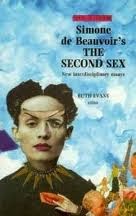
The twentieth century has been particularly rich in writings which have disseminated ideas, both old and new, with far-reaching consequences. The century has also witnessed the emergence of many movements which have championed the emancipation of the under-privileged, subjugated classes. One such movement is Feminism which, in spite of its branching off into sub-ideological splinter groups, inspired several women writers who are pioneers in their own right. One of these is Simone de Beauvoir, the woman from France, who created quite a stir with her seminal book, The Second Sex, from which this piece is excerpted.
She belonged to the first generation of European women who received formal education on par with men. In 1929, while studying at the Sorbonne, she became the ninth woman in France to pass the prestigious “aggregation” examination in philosophy, coming second only to Jean-Paul Sartre, one of the greatest philosophers of the present century and the exponent of Existentialism. For Beauvoir critical encounter with Sartre, whose proposal for marriage she refused but whom she visited daily until his death in 1980, was a rewarding experience and she adored him. She said of him: “It was the first time in my life that I felt intellectually inferior to anyone else”.
The book, The Second Sex, deals with the oppression of women who live under patriarchal power structure. A woman is not born but is made by society whose institutions are patriarchal in character. The woman is made to realize that she is the “other” in relation to man. Through prolonged indoctrination, the woman from childhood onwards is made to identify herself with the patriarchal image imposed upon her. No wonder the book disturbed male psyche. It was greeted with outrage when first published in France in 1949. The Vatican proscribed the book and Albert Camus was angry with Beauvoir for making the French male look absolutely ridiculous. However that may be, it is arguably one of the overwhelmingly great books of our times.
Besides political and philosophical works, Beauvoir also wrote novels and edited a journal (Modern Times) with Sartre. Her four volumes of autobiography, which she wrote between 1958 and 1972, throw additional light on her personality. She died in 1986 at the age of 78.
An Appreciation:
Beauvoir contends that women, throughout history, have been marginalized. She is of the firm view that if one needs to change the world one has to be firmly anchored in it. But unfortunately even those women who seem to be firmly rooted in society are not free from subjugation. Besides, an extraordinary woman is held to be a monster. Only accidentally have a few women been able to prove themselves as capable as men and this is evidenced by the lives of such personalities as Rosa Luxemburg or Marie Curie. Beauvoir argues that it is not that the women are inferior as such but they have been treated so all through history and this explains the reason why women, in history, have been represented as insignificant creatures.
Beauvoir cites the example from the realm of culture to establish her argument. In the fields of arts and letters, which lie at the root of culture, woman has been glorified. From the Middle Ages to the eighteenth century, one sees the spectacle of woman being praised. She inspired poets, artists and others, who drew sustenance from a feminine referential frame which stimulated their inspiration and sharpened their ethical sensibilities. Woman became the centre of man’s world and this led her to achieve education which Beauvoir regards as “feminine conquest”. However, though a few women may have won certain privileges for themselves, the lot of the average woman has been a tale of suppression. This is because women did not actively engage themselves in various walks of life though they may have been glorified in art and literature. Paradoxically, art and literature, Beauvoir argues, are rooted in action. If women are always found to be on the margin of history, “how can they create anything new?” asks Simone de Beauvoir. When women are collectively suppressed, it is impossible for them to rise individually. Beauvoir reiterates that it is necessary for women to be rooted in history. Drawing a parallel between woman’s growth and genius, Beauvoir says that just as genius is achieved so is her freedom attained. But, unfortunately, the condition in which she finds herself is such that she is not able to achieve freedom.
The anti-feminists interpreting history, argue that though women had opportunities to develop their personalities they had not created anything extraordinary. Beauvoir refutes this argument. A few examples of successful women cannot be cited for all the women to prove that they are not suppressed. In her defence, she cites the names of such authors as Mill, Stendhal and a few more who maintained that women had not been given a chance to prove themselves. It is because of this that women demand that they be given a new status which recognizes that they too are human beings.
The situation today seems to be favourable, says Beauvoir. However, one can’t deny the fact that the world and its institutions are still in the hands of men. Women are still denied many rights. For example (at the time of her writing), women were not allowed to vote in Switzerland (the right was granted in 1971). In France, the law of 1942 (subsequently revised in 1965) favoured husbands. True equality between men and women does not exist today, according to Beauvoir.
This is mainly due to the pressures of marriage. A woman bears the main burden of marriage and its attendant problems, though the laws are a little easy on birth control and abortion. Women have to look after the household, bring up children, and, in France particularly, it is deemed beneath the dignity of men to help women in these chores.
Being a worker is not the easiest thing for any one and least of all for a woman, especially if work is so burdensome that it is no more than servitude. Work becomes a thankless drudgery as it brings to women no social dignity, freedom of behavior, or even economic independence. When right to work becomes a burdensome obligation, marriage seems to be the only way out. But with increasing self-awareness and the knowledge that the job could free her from marriage, a woman is no longer willing to submit herself to domestic drudgery. Ideally a woman would prefer a reconciliation between her job and her family life that is not too demanding for her. To be able to achieve this calls for a great moral effort on the part of woman as there is always a temptation to submit to a convenient solution – “to sell herself to one of these privileged men.” The temptation is a dangerous obstacle because marriage is a kind of lottery where there will be only one winner out of thousands.
- Notes by Dr.V.Rajagopalan, MCC
Monday, 19 July 2004
I BA English - Grammar Class - log:
Seminar Topics:
Shannon - Tense, subject/predicate
Bijoy - Nouns
Judith - Figures of Speech
Bernadette Florence - Active and Passive
Sajeev - Adjectives and Adverbs
Tinku - Verbs
Shannon - Tense, subject/predicate
Bijoy - Nouns
Judith - Figures of Speech
Bernadette Florence - Active and Passive
Sajeev - Adjectives and Adverbs
Tinku - Verbs
Monday, 12 July 2004
General Course - Updates:
II Hr:
Each group has been asked to choose a topic for seminar. Other groups will ask questions based on the theme chosen.
Taught the analysis of a text with the help of rhetorical devices.
LABELS, HEADINGS and MESSAGES - the difference.
Label - word/word cluster indicating the nature of the thing to which it is attached.
Heading - what the header material is about. (Letter Writing, English Architecture etc)
Messages - Containst two items et al.
Vocab: disheveled - untidy
a baffling problem - puzzling
lenient - not strict
repulsive - disgusting
audacious attempt - bold
parry a blow - ward off
incredible story - unbelievable
indefatigable worker - tireless
clandestine meeting - secret
Each group has been asked to choose a topic for seminar. Other groups will ask questions based on the theme chosen.
Taught the analysis of a text with the help of rhetorical devices.
LABELS, HEADINGS and MESSAGES - the difference.
Label - word/word cluster indicating the nature of the thing to which it is attached.
Heading - what the header material is about. (Letter Writing, English Architecture etc)
Messages - Containst two items et al.
Vocab: disheveled - untidy
a baffling problem - puzzling
lenient - not strict
repulsive - disgusting
audacious attempt - bold
parry a blow - ward off
incredible story - unbelievable
indefatigable worker - tireless
clandestine meeting - secret
Thursday, 1 July 2004
Part II English - I BSc Phy/Chem - Web log:
I Hr:
Discussed 'Daffodils' in class.
Gave the important figures of speech needed to analyse a text -
Style/Symbol/Pun/Paradox/Antithesis/Sign/Metaphor/Simile/Language et al.
Content:
Who is addressed?
What kind of time and place is the poem set in?
What's the message of the poem?
What's the tone of the poem? is it serious/reflective/ironic/satirical?
What type of peom is it - lyrical/pastoral/epic/narrative/descriptive etc?
Form: Any set pattern or layout - like Ballad, sonnet etc.
Metre: Stress, Pattern, rhyme scheme, rhythm, alliteration, assonace, end rhyme etc.
Discussed 'Daffodils' in class.
Gave the important figures of speech needed to analyse a text -
Style/Symbol/Pun/Paradox/Antithesis/Sign/Metaphor/Simile/Language et al.
Content:
Who is addressed?
What kind of time and place is the poem set in?
What's the message of the poem?
What's the tone of the poem? is it serious/reflective/ironic/satirical?
What type of peom is it - lyrical/pastoral/epic/narrative/descriptive etc?
Form: Any set pattern or layout - like Ballad, sonnet etc.
Metre: Stress, Pattern, rhyme scheme, rhythm, alliteration, assonace, end rhyme etc.
Tuesday, 29 June 2004
III BA English - Introduction to R.K.Narayan's THE GUIDE
II Hr
The Guide -
Ideal vs Real in 'The Guide': Looking at the various points of entry within the novel, as they tell us quite a lot about the whole novel they come from. Insight into People/Places/Moods.
The Guide -
Ideal vs Real in 'The Guide': Looking at the various points of entry within the novel, as they tell us quite a lot about the whole novel they come from. Insight into People/Places/Moods.
Synopsis: The novel begins with Raju sitting beside the temple and meeting the villager named Velan, who mistakes him for a holy man. The novel then alternates between an account of Raju’s career as a holy man, which is told in the third-person, and Raju’s account to Velan of his previous career as a tour guide and lover, which is told in the first-person. This dualism reflects the dualism in Raju’s character. He is transformed from a sinner to a saint, though he is never truly a sinner, and never truly a saint. Because of his capacity for empathy, Raju is a sympathetic character throughout the novel. http://www.angelfire.com/md2/timewarp/theguide.html
Wednesday, 23 June 2004
Part II English Classes - Updates:
A streaming test will be conducted for the I BA Political Science and I BA History classes on 24 June 2004 [IV hr]
A streaming test will be conducted for the I BSc Physics/ Chemistry classes on 25 June 2004 [IV hr]
A streaming test will be conducted for the I BSc Physics/ Chemistry classes on 25 June 2004 [IV hr]
Tuesday, 22 June 2004
III BA English - Appreciation of a Text: Short Story
III Hr: Appreciation of a Text:
A story has a beginning, a middle, and an end - but (as they say) not necessarily in that order! But what is a story?
The simplest form of story has:
A story has a beginning, a middle, and an end - but (as they say) not necessarily in that order! But what is a story?
The simplest form of story has:
- a premise
- development
- complication
- denouement (conclusion; often the twist in the tale).
Taught the aspects of Appreciation of a text - looking into/looking at/looking beyond a Text, with reference to an excerpt from a short story by R.K.Narayan
Expectations: Predictable, or are there unexpected elements?
Traditional: What is traditional, what is not?
Tone: Is it serious or not? (How can you tell?) (And where can you tell?)
Moral/characters/language/symbols/Function etc.
Function - is the author using the fable form to tell a different kind of a story? What is it really about, in your opinion? [to be contd in the next class...]
Thursday, 17 June 2004
Welcome to the NEW ACADEMIC YEAR:
Dear Students,
Welcome to the new academic year. Let the new year bring in dynamism and dedication and success in all your endeavours.
Regards and all best wishes,
Rufus
Welcome to the new academic year. Let the new year bring in dynamism and dedication and success in all your endeavours.
Regards and all best wishes,
Rufus
Monday, 12 April 2004
I BSc Chemistry - Internal Mark Statement
| No. | Name | C.A-1 |
| 1. | Anita, M | 33 |
| 2. | Archana, M | 37 |
| 3. | Evanjalin Jaya Ranjani, J | 35 |
| 5. | Kalpana, D | 37 |
| 6. | Kethseeyal Usha, J | 39 |
| 7. | Mary Saranya | 37 |
| 8. | Nirmala, M | 35 |
| 9. | Praveena Mary, S | 35 |
| 10. | Vidhya, S | 40 |
| 11. | Vidhyarani, R | 32 |
| 12. | Anandan, D | 34 |
| 13. | Arun, K.J | 33 |
| 14. | Ashokan, J | 36 |
| 15. | Bathrinarayanan, A | 38 |
| 16. | Bhuvanesh, N | 37 |
| 17. | Christopher, R | 41 |
| 18. | Daniel, D | 31 |
| 19. | Daniel Enoch, L | 26 |
| 20. | David, J. | 36 |
| 21. | David, S. | 41 |
| 22. | Felicks, N. | 25 |
| 23. | Franco, F | 30 |
| 24. | Gnanadeva Oli, D | 36 |
| 26. | Jacob George | 43 |
| 27. | Janakiraman, R | 37 |
| 28. | Joel Prasanna , S | 33 |
| 29. | Jonas Moses Inbaraj | 33 |
| 30. | Mohammed Thameem, U | 32 |
| 31. | Mohandass, G.K. | 37 |
| 32. | Prakash, R. | 40 |
| 33. | Prakash, V. | 39 |
| 34. | Prince Shadrack | 40 |
| 35. | Samuel George Mathew | 41 |
| 36. | Santhosh Kumar, A | 33 |
| 37. | Satadru Chaterjee | 42 |
| 39. | Sriram, S. | 41 |
| 40. | Thangadurai, P. | 34 |
| 41. | Vijay selva Kumar | 31 |
| 42. | Vinoth Kumar, M | Ab. |
Subscribe to:
Posts (Atom)
Featured post
Welcoming the Winter Guests | A Dawn Birding Adventure in Namma Chennai Today 💚
The First Flock | Welcoming Seven Magnificent Migrants to Namma Chennai #intothewildwithrufus #birding 6th September 2026 Today, as part of ...
